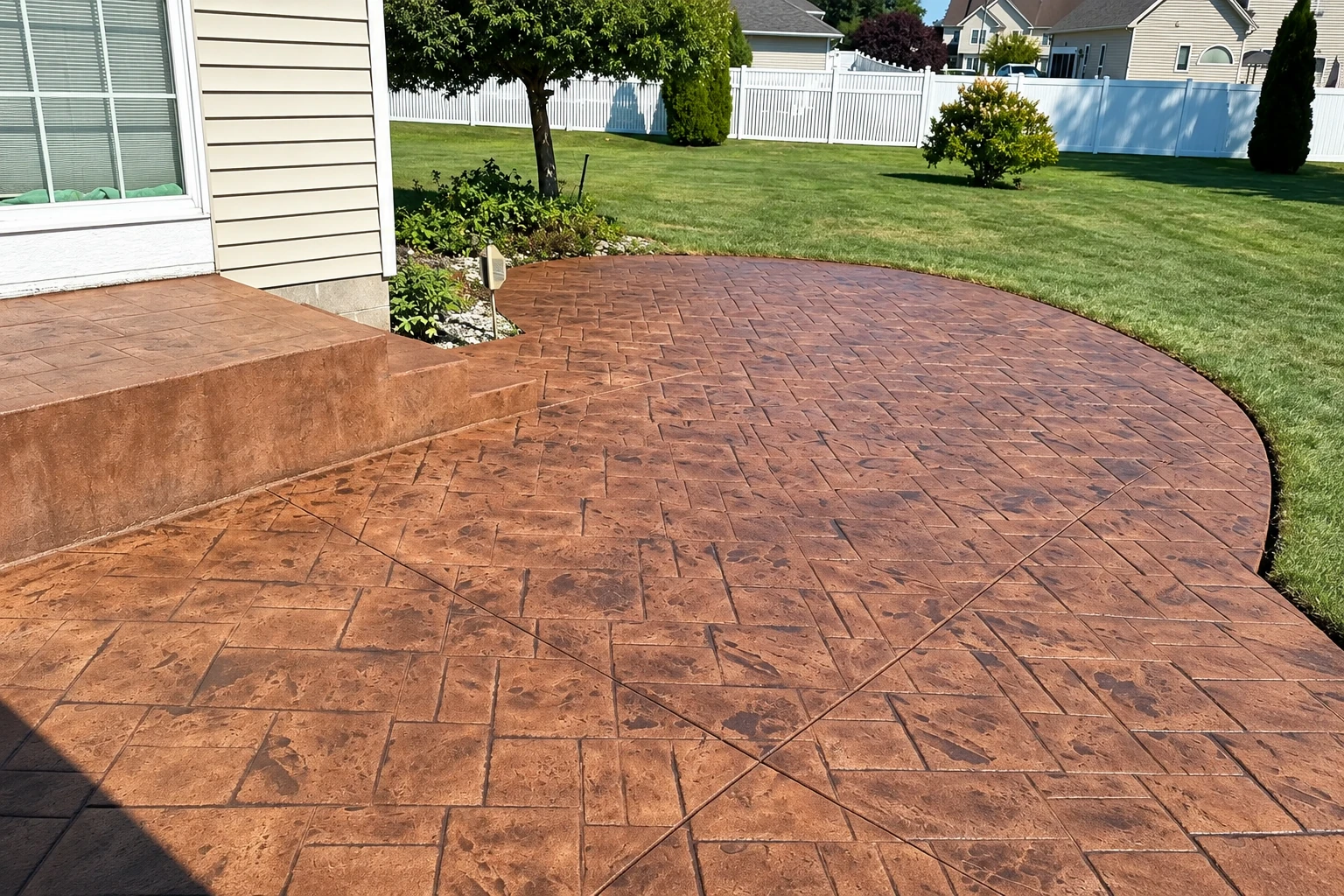
Concrete sidewalk building in College Station TX - a smooth, level walk to your door
Worn path in the grass or an old walk that trips people? We pour a new concrete sidewalk on a base packed to hold it.
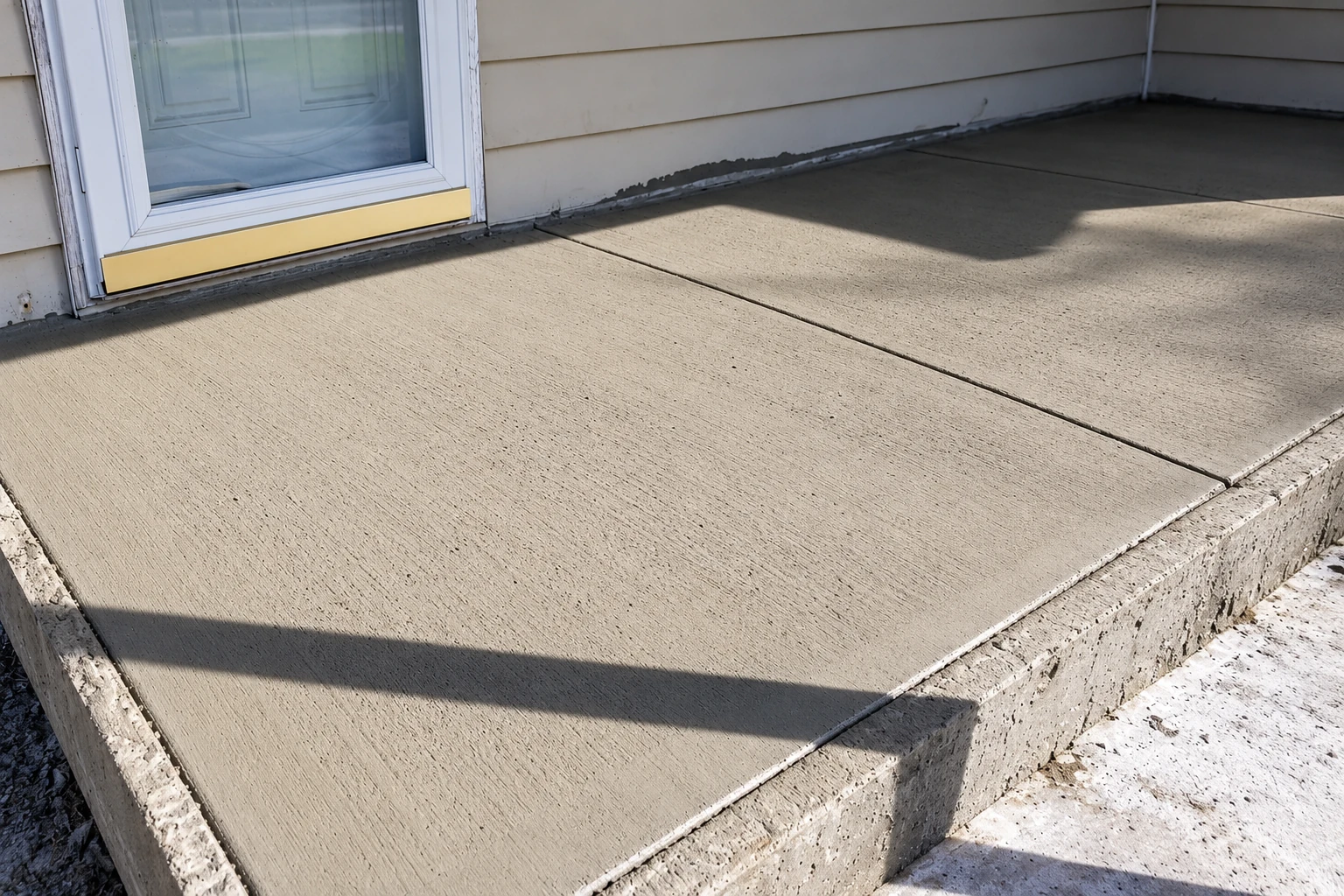
A sidewalk is a small slab. It still needs a real base.
Concrete sidewalk building in College Station is flatwork, the flat slabs like walks, patios and driveways, laid out along a narrow strip. We dig out the route, pack the subgrade, the ground the walk sits on, then pour, finish and cure the slab, which means keeping it damp so it doesn't dry out weak.
Most bad walks fail underneath. Either the base got raked instead of packed and settled with the dirt, or the walk tilts water toward the house, or nobody cut control joints, the shallow cuts that give a crack a straight place to go. The base is the first thing people want to cut, and the last thing I will.
The price moves with the walk's length and width, how much digging and base it needs, whether an old walk comes out first, and the finish, from a broom finish, the light texture that keeps shoes from slipping, to decorative concrete. The weather and any inspection set the schedule. You'll get your own figure in a written estimate.
Your feet usually know first. Here's when a new sidewalk makes sense.
A path worn into the grass
If everybody already walks the same line to the door, that's where the sidewalk belongs. Until it's there, every rain turns that line into mud tracked through the house.
A lip where the walk lifted
A root or swelling ground has usually pushed one section up past the next. The edge doesn't settle back down on its own, and sooner or later somebody catches a toe on it.
Water sitting on the walk
A low spot or a walk that tilts toward the house usually means the base settled or was never packed. Every rain that sits there softens the ground underneath and makes the dip worse.
Here's how a sidewalk job goes. I'm there for all of it.
You call, and I come out myself to walk the route with you, measure it and ask what it has to carry. I look hard at the trees along the way, since roots and a new walk don't always get along, and if the walk ends at a tired garage floor, I'll look at that too.
We're licensed and insured. I write your estimate myself, and if you go ahead, we handle the permit side when the job needs it, set the forms and the rebar, the steel that holds the slab together, and wait on any inspection before the truck gets called.
On pour day our crew digs out, packs the base and pours, and I'm on site running it. Then we cure it right, rake up the yard, walk it with you and tell you when it's ready to use.
Thinking about a new sidewalk? Tell us about the walk.
Send the walk's length, the trees on its route and whether it meets the street. We reply within one business day to set up your free, no-obligation estimate.
(979) 393-7025Sidewalks that meet the street. The city has a say there.
In College Station, the part of a walk inside the right-of-way, the strip along the street the city controls, has to meet the city's paving standards and pass a city inspection. The city's permit list names drive approaches and curb cuts, not sidewalks, so I check with Planning & Development Services at the start, and we pull any permit the job needs.
We do the same work in Bryan and Navasota, and I check with the office that covers each address first.
Questions about a new sidewalk. Here are straight answers.
Read through the answers below. If your question isn't here, call (979) 393-7025 or email sales@collegestationconcreteconstruction.com and ask me.
How much does a concrete sidewalk cost in College Station?
Installing a concrete sidewalk across the US usually costs about $12 to $14.50 per square foot. That's the national range for an installed walk, not our price, and length, base work, trees and finish move yours, so I'll write you an estimate once I've seen the route.
Can concrete be poured on a hot day in College Station?
Yes, as long as the pour is planned around the heat. Trade guidance is to place and finish concrete outside the hottest part of the day, and on hot or dry days to dampen the ground, forms and steel first without leaving puddles, which heads off early cracks. On hot days we pour ahead of the heat.
How long does a new concrete sidewalk need to cure?
In hot weather, trade guidance is to start curing as soon as finishing ends and keep it going for at least 3 days. That can be wet burlap under plastic, a curing compound or water, and we keep the new walk covered and damp while it cures, then tell you when it's ready.
Will trees near my new sidewalk cause problems?
They can. Research on Texas clay from 1971 found that tree roots dry out the soil under pavement, which leads to uneven lifting, and that trees near pavement can cause settling. That's why the trees get a hard look on the first visit, before we settle on the route.
Will my new concrete sidewalk crack like the old one?
Some cracking is normal for concrete, and I'd rather tell you that now than explain it later. On clay, a crack gives rain a direct path into the ground, which speeds up heaving and wear, so we pack the base and cut joints where we want the cracks. Satisfaction guaranteed on every job.
Need a sidewalk, patio or driveway? Call and we'll come look.
Call (979) 393-7025, even after work, or use the form. Tell us where the walk starts and ends, and we'll set a time to come look.
Mon–Fri: 6 AM–9 PM, Sat–Sun: 7 AM–9 PM